 Pyrmont Pyrmont
|
|
Click here to go to the main menu, Harbour
East or Harbour West pages.
These pages
are to be viewed together with your field and class notes. To help, each
image can be enlarged by clicking on it.
|
|
|
|
Much
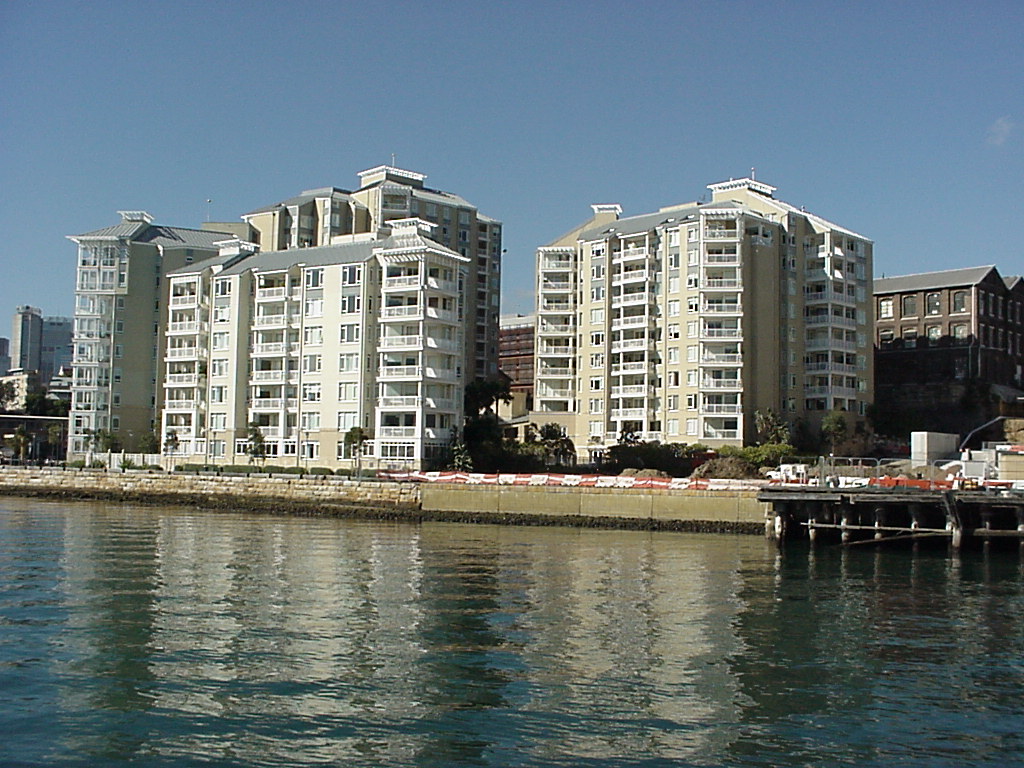
of the development along the Harbour foreshore has been piecemeal. The widespread
decline of the Pyrmont/Ultimo area by the 1980s was an opportunity to carry
out redevelopment on a suburb scale (known as urban renewal). Such an undertaking
required a great deal of co-operation between public and private bodies.
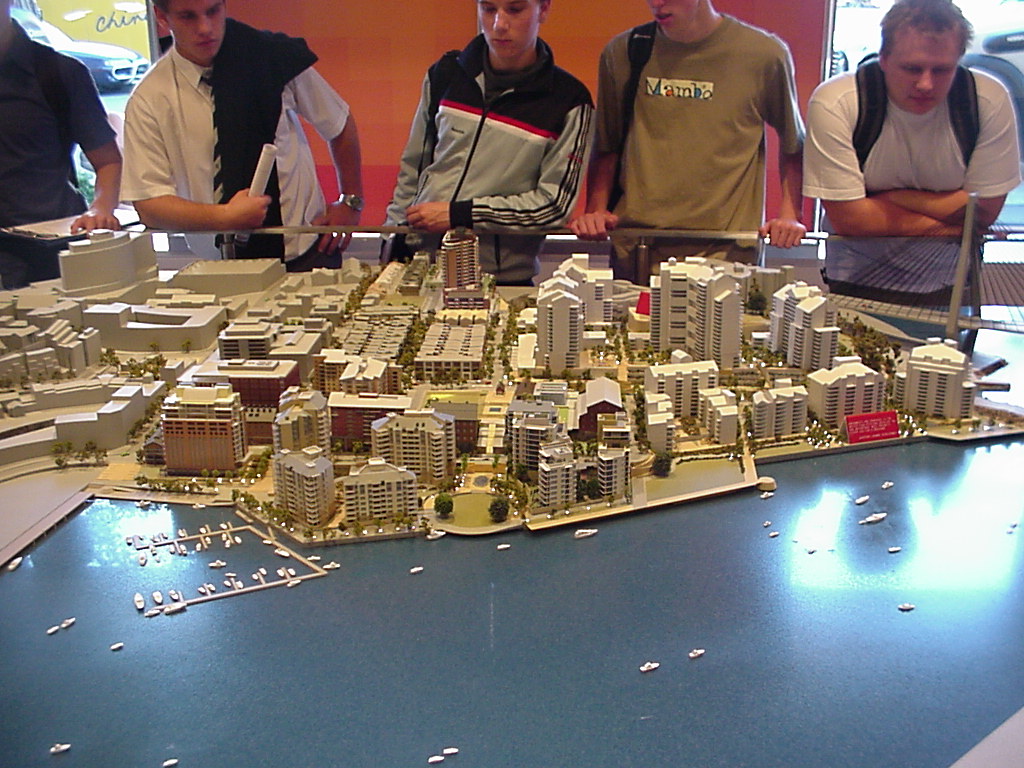
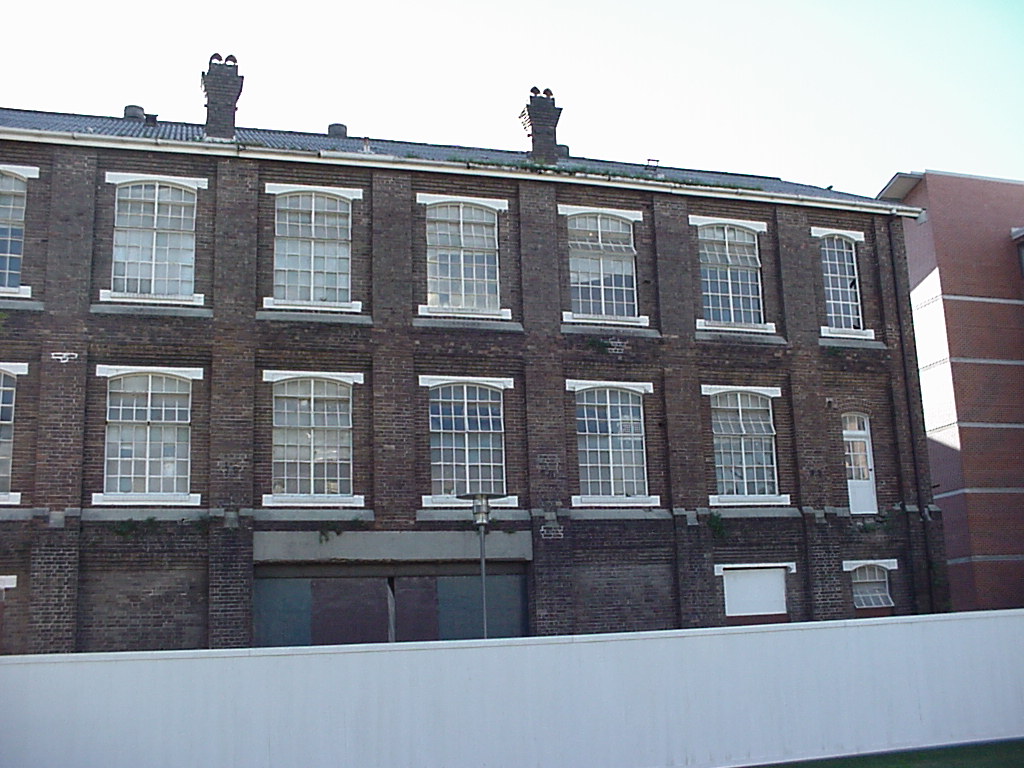
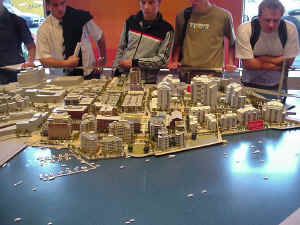
This model shows one part of the development (mainly Jackson's
Landing). Buildings in brown are reused and recycled heritage-listed
buildings. |
|
|
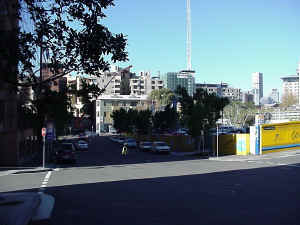
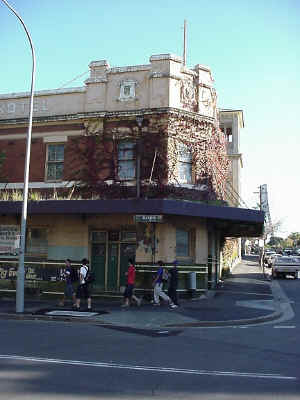
The
Pyrmont site was the second Sydney location for the Colonial Sugar Refining
Company (CSR). The first, at Chippendale, became too crowded and so they
moved in 1855. This expansion led to further building and the purchase of
housing for the workers. By 1937 they had virtually all the water frontage
in Pyrmont. However, changing technologies meant that the site was no longer
useful and so it closed in the mid-1990s in favour of their Queensland operations. |
|
|
The
management of urban renewal is a partnership of public and private interests
(often called stakeholders or actors). Here, the public side started with
City
West Development Corporation which was formed in 1992 (today this is
the Sydney Harbour
Foreshore Authority with expanded powers). The aim was to revitalise
4 inner-Sydney areas of which Pyrmont was one. Using legislation to provide
a basis for planning they set about schemes for improving the infrastructure
and housing mix. The idea was to have a mix of business, public and private
housing so that a community could be easier created. The plan gave the basic
design but it was left to developers to carry out the building. Funding
came from Commonwealth and private sources. Planning
NSW controls the overall ideas of development through LEP2005.
Pyrmont's basic aims?: affordable
housing, more public open space, more businesses (shops, IT etc.), café
culture etc. The idea was to get 40,000 workers in the area by 2001.
|
|
|
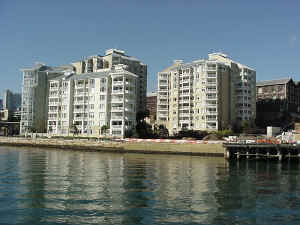
One
of the key features of the development has been to create a mix of housing
types and styles. Urban renewal means that some areas will be completely
redeveloped... |
|
|
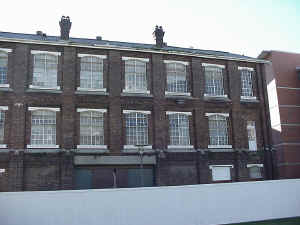
...some
will be recycled (like this Tablet House)... |
|
|
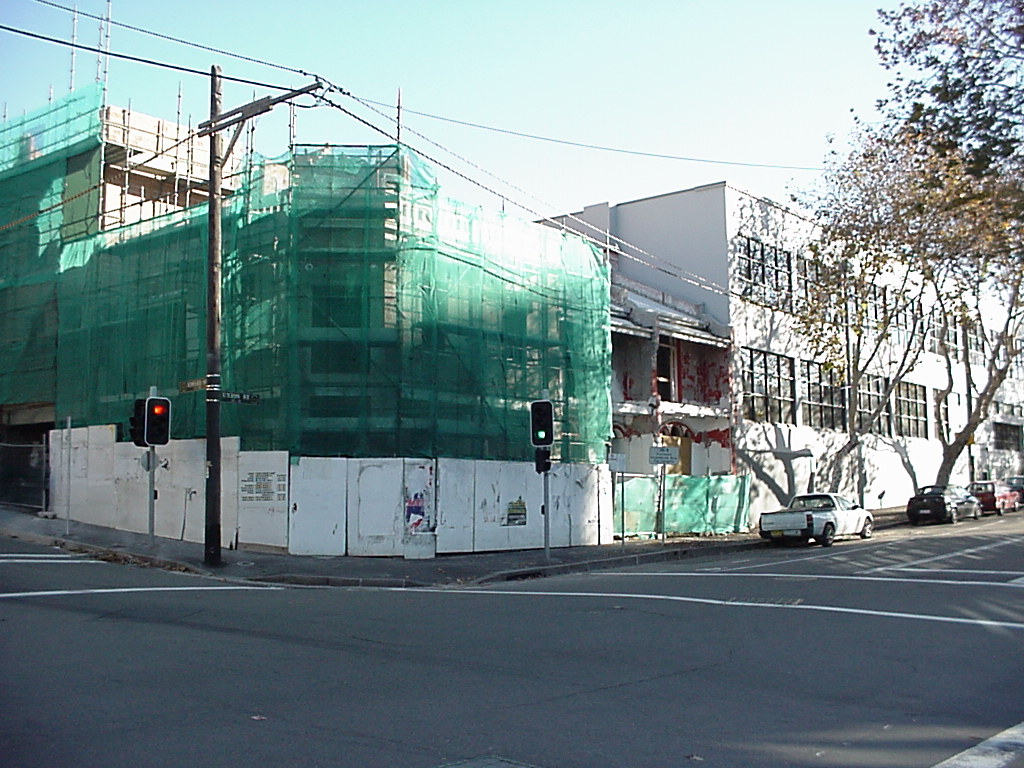
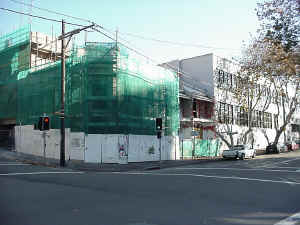
...and
some will just be re-used with some adaptations for renovation or modern
living requirements. Often these three aspects of urban renewal go on side-by-side.
This image shows two terraces being renovated next to a rebuilding site. |
|
|
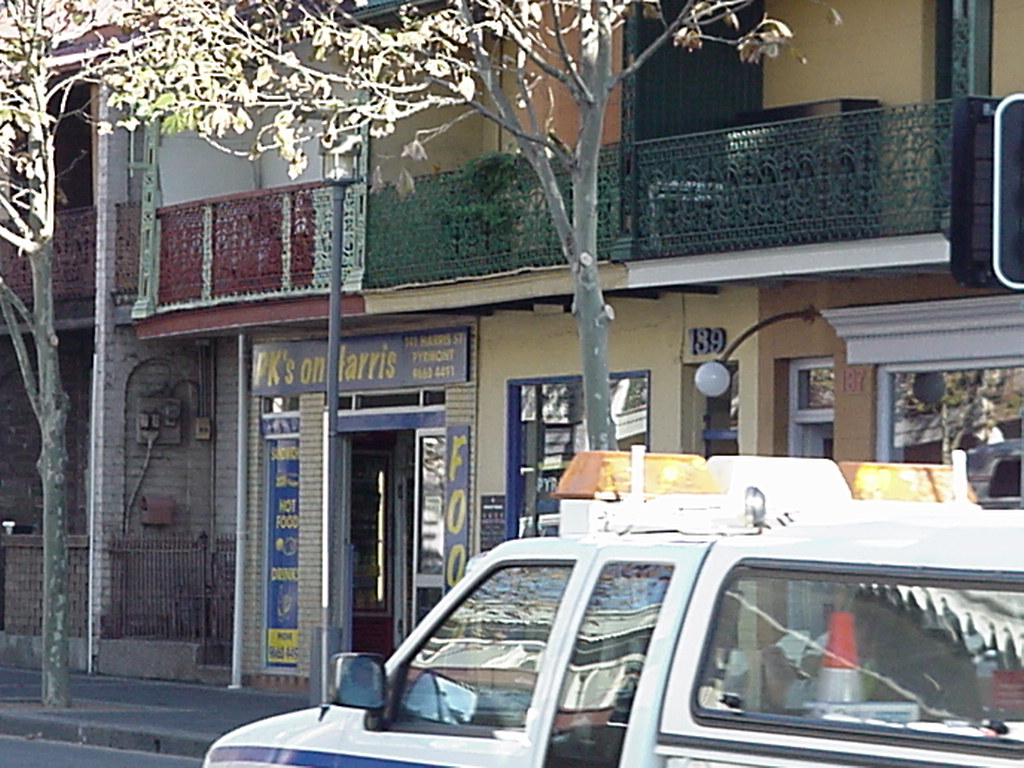
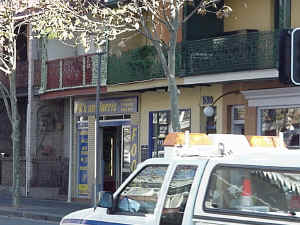
Heritage
conservation is seen as important to protect the character of the area.
Sydney Lace is seen as a key element of terrace design as here on these
houses. |
|
|
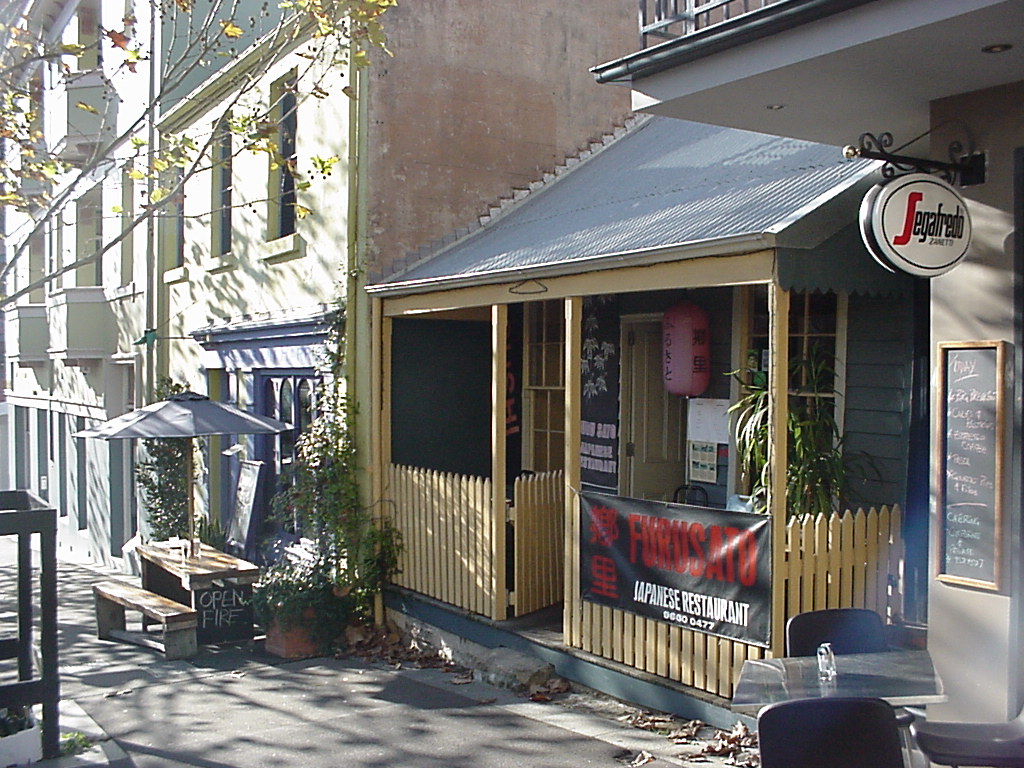
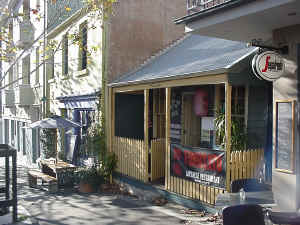
A community
is more than a series of buildings. It needs local facilities such as
these restaurants. One of the problems with renewal is that is often displaces
old
communities without having anything obvious to replace it.
|
|
|
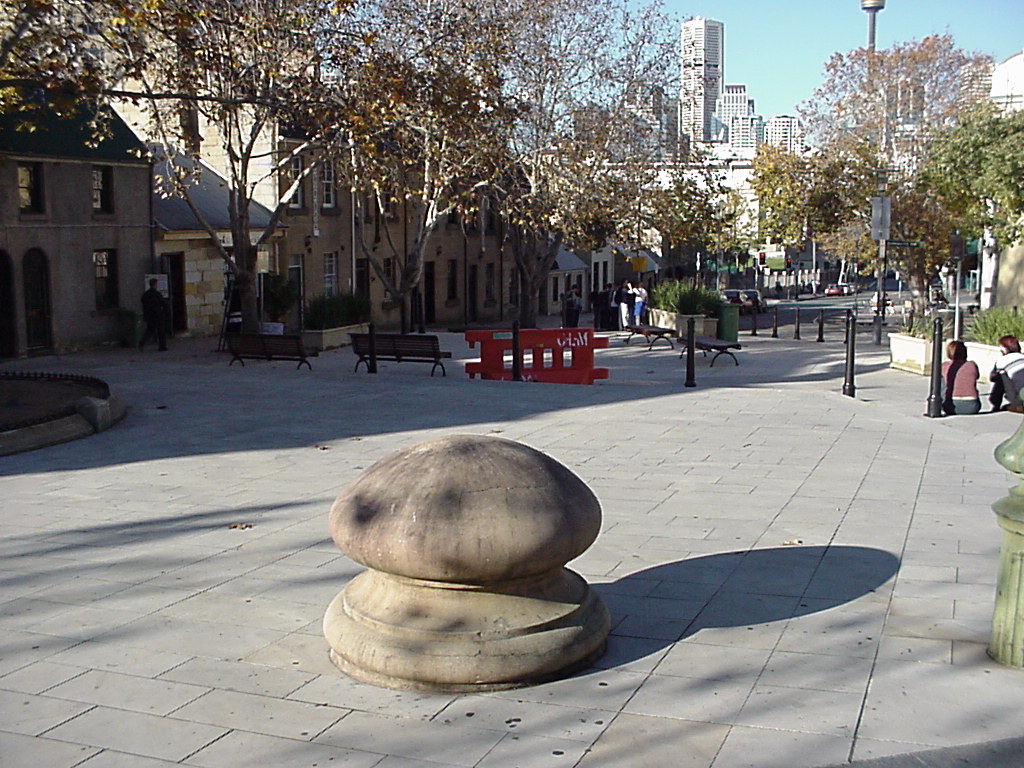
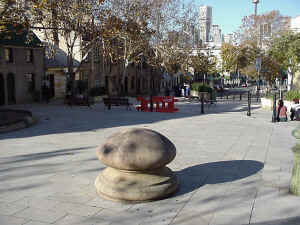
Transport
planning and infrastructure development are also needed. If the aim is
to get most people to walk to work then certain areas must be modified
such as the closure and pedestrianisation at the top of Union Street.
|
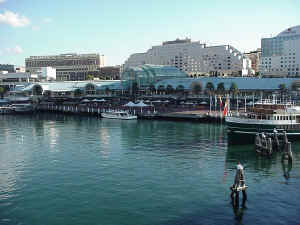 |
Finally,
the new Sydney Harbour Foreshore Authority has expanded powers to look after
not only the Pyrmont/Ultimo area but also the key tourist attraction of
Darling
Harbour. |